Is Washington Creating the Conditions for Another Iran War?
U.S. pressure on Tehran is intensifying again. Iran says it sees signs of another attack. The critical distinction is between evidence of escalating pressure and the unproven claim that Washington is deliberately trying to make Iran attack first.
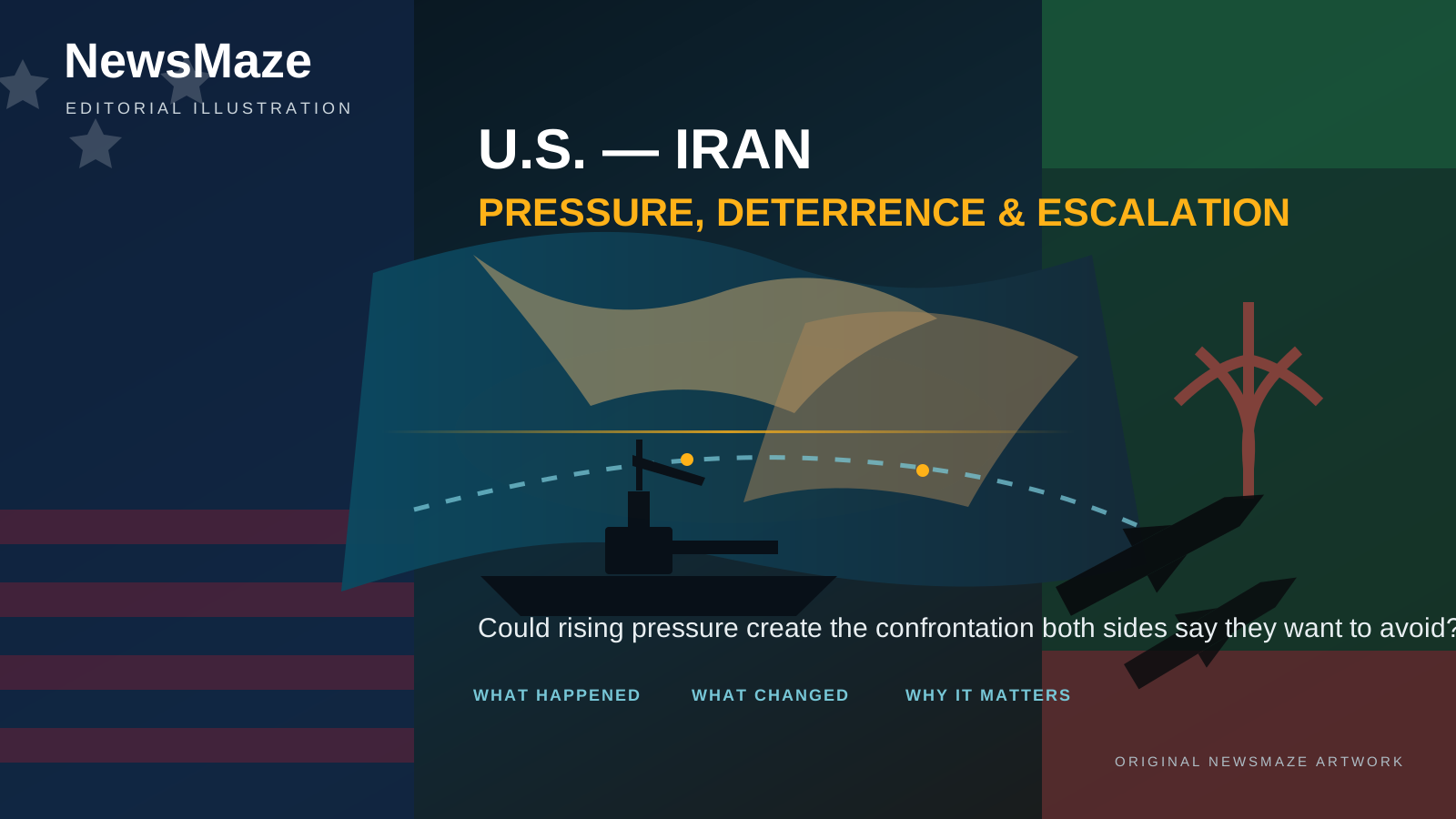
Washington and Tehran have exchanged new threats amid intensifying regional pressure.
The confrontation now spans sanctions, shipping, regional armed groups and wider security commitments.
Escalation can occur even if neither side publicly says it wants a larger war.
What happened
Tensions between the United States and Iran have risen again as the two governments trade warnings and regional conflict involving Iran-aligned forces adds additional pressure. New warnings from both sides were reported on September 20.
Iranian officials have also said they possess indications that another strike could be coming. NewsMaze has not independently verified that claim, and it should not be treated as established fact.
Is the U.S. trying to provoke Iran?
Two different claims need to be separated.
Supported by public evidence: Washington is deliberately increasing pressure on Iran through economic measures, warnings and military signaling.
Not established by the public evidence reviewed here: that Washington is intentionally trying to make Iran attack first so it can manufacture a justification for a larger war.
The second proposition may be argued by commentators, but motive cannot be presented as fact without evidence showing that intent.
Why the distinction matters
Escalatory pressure can produce a confrontation even when provoking a war is not the stated objective. One side can view a deployment, sanction or warning as deterrence while the other interprets the same action as preparation for attack.
That produces a dangerous feedback loop: Iran prepares for retaliation because it fears attack; Washington can read those preparations as evidence of a growing threat; additional U.S. preparations can then reinforce Tehran's belief that an attack is coming.
What NewsMaze is watching
- U.S. economic and military pressure: sanctions, deployments and official warnings.
- Iranian responses: military preparations, official statements and regional coordination.
- Regional armed groups: whether attacks widen or become directly tied to U.S. forces.
- Shipping routes: the Strait of Hormuz and Red Sea, where disruption can affect energy and trade.
- Diplomacy: evidence of negotiations, intermediaries or changes in stated conditions.
What we know — and what we don't
Pressure and threats have increased. Regional conflict and shipping risks make miscalculation more consequential.
There is no publicly verified evidence reviewed by NewsMaze establishing a U.S. strategy of deliberately inducing an Iranian first strike.
Why Americans should care
A wider confrontation could affect oil prices, inflation, shipping, financial markets, U.S. military commitments and relations with regional partners. Those consequences are more useful to track than speculation about private motives that cannot yet be demonstrated.
Has the confrontation reached a point where actions intended as coercion or deterrence could produce the very Iranian response that would then justify additional military action?
That question can be tested against observable evidence: deployments, sanctions, official warnings, attacks, diplomacy and changes in shipping and energy flows.